
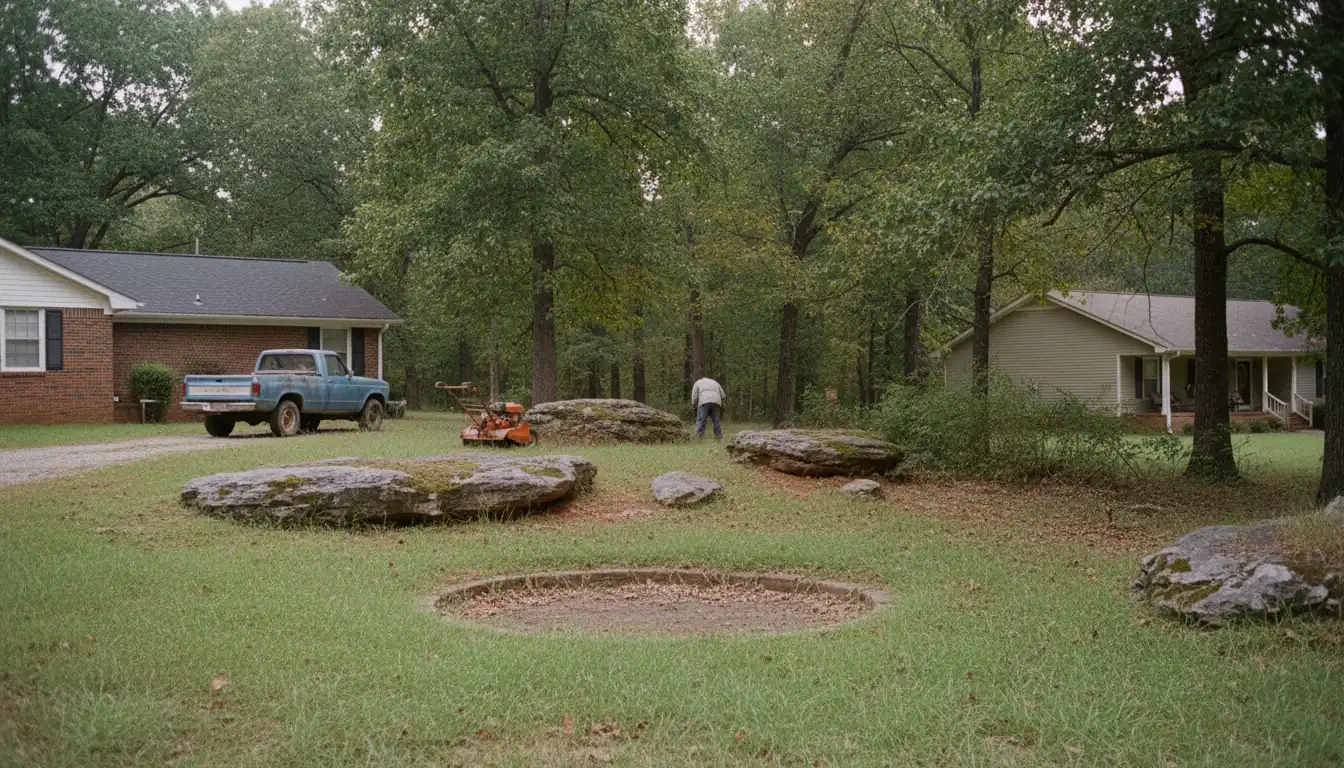
Septic Service for Karst and Sinkhole-Prone Lots in Nashville, TN

Middle Tennessee sits on fractured limestone. Systems on karst ground fail differently, and they need looking at differently.

from $400

Standard pumping rates apply; karst-specific assessment adds $100–$250 where solution features need evaluating

Septic Service for Sinkhole and Karst Lots in Nashville, TN
  • Tenn. Comp. R. & Regs. 0400-48-01-.20 governs septic pumping contractors
  • Davidson County administers its own septic program as a TDEC contract county
  • Tennessee guidance: pump every 3–5 years
  • Grease traps serviced every 30 days · interceptors every 90
  • Sludge and scum depth recorded on every visit

Last updated: August 31, 2026

615 Septic Tank Pumping is a septic tank pumping company serving Nashville and Davidson County, Tennessee, and septic service for sinkhole and karst lots is one of the services it provides across the county. Middle Tennessee sits on fractured limestone. Systems on karst ground fail differently, and they need looking at differently.

When people call us about this

These are the situations that bring most septic service for sinkhole and karst lots calls in:

  • A visible sinkhole or depression on or near the lot
  • Effluent disappearing unusually fast with no ponding
  • A field that never shows wet even under heavy use
  • Shallow soil over rock across the property
  • County setback questions raised during a permit or sale

What is included

Every septic service for sinkhole and karst lots job includes all of the following. Nothing on this list is an upsell presented once we are on site.

  • Tank pumped and inspected to standard
  • Field walked for solution features, depressions and swallow holes
  • Setback distances from visible karst features assessed
  • Soil depth over bedrock evaluated across the field footprint
  • Assessment of whether effluent is being treated or simply disappearing
  • Groundwater risk noted where fractured rock is close to the surface
  • Reserve-area assessment accounting for karst constraints
  • Written report suitable for a county environmental health conversation

What it costs, and what moves the price

The pumping itself is priced normally. What differs is the assessment: setback from visible solution features, and whether the field has adequate soil column above bedrock.

The published range for this service is Standard pumping rates apply; karst-specific assessment adds $100–$250 where solution features need evaluating. We give you a band before we come out and a firm number before we do anything that changes it. If you want a figure right now without talking to anyone, the cost estimator takes three questions.

How septic service for sinkhole and karst lots runs, start to finish

  1. 01

    Read the ground

    Depressions, swallow holes and rock outcrops tell you where the limestone is close to the surface. On karst lots that map matters more than the tank.

  2. 02

    Service the tank normally

    Pumping and inspection proceed as on any system. A karst lot does not change how a tank is serviced — it changes what happens downstream of it.

  3. 03

    Assess the field against the geology

    A field that never looks wet is not necessarily healthy. On fractured limestone, effluent can leave fast without receiving the soil filtration that treatment depends on.

  4. 04

    Report against setbacks

    County environmental health offices across Middle Tennessee enforce setbacks from visible solution features. You get a written assessment of where your system stands relative to them.

Doing it yourself, hiring cheap, and doing it properly

The difference between a cheap pump-out and a proper one is not the truck. It is whether anybody looked inside the tank while it was empty.

  Doing it yourself Cheapest quote Done properly
Solids actually removed Surface liquid only — no way to remove settled sludge Liquid draw-down; tank looks emptied, sludge stays Liquid, scum and sludge pumped, then backflushed
Baffles inspected Not visible without emptying the tank Rarely — the tank is not pumped down far enough to see them Both baffles inspected while the tank is empty, and reported
Effluent filter Usually not known to exist Left alone Removed, rinsed back into the tank, inspected, replaced if split
Interval set by Guesswork or a number off the internet A flat three years for every customer Measured sludge and scum depth against your tank capacity
Disposal of septage No lawful route for a homeowner Varies — ask where it goes Licensed disposal under Tennessee pumping contractor rules
What it costs Nothing up front Slightly less than proper $300–$525 typical
What it risks Solids reach the drain field. Field replacement $7,000–$15,000+ Same failure, delayed. The field pays for the saving The field is what you are protecting

Worth reading before you book

Need septic service for sinkhole and karst lots in Nashville?

Call for a price, or use the estimator if you would rather not talk to anyone yet.

Septic Service for Sinkhole and Karst Lots — questions people ask

Does a sinkhole on my lot threaten my septic system?

It can, in two distinct ways. A sinkhole can physically undermine and swallow part of a drain field. More insidiously, fractured limestone lets poorly treated effluent reach groundwater without the filtration a proper soil column provides — so the system appears to work while failing at its actual job. County environmental health offices watch karst features closely and enforce generous setbacks for exactly this reason.

My drain field never looks wet. Is that good?

Not necessarily. On karst ground, effluent disappearing quickly can mean it is running into fractures rather than percolating through soil. A field that never ponds but sits on shallow soil over fractured rock warrants assessment rather than reassurance.

Why are Middle Tennessee drain fields larger?

Because the soils drain slowly. Nashville sits in the Central Basin, where limestone dissolves into sinkholes, caves and fractured bedrock, and the soils above are frequently shallow clay loam over rock. Slow percolation means more absorption area is needed for the same daily flow, so local fields skew large — which is also why replacing one here costs more than the national average.

Can I even get a system permitted on a karst lot?

Often yes, but the design is constrained. Tennessee permitting requires a site evaluation including a soil morphology assessment by a soil scientist, and setbacks from solution features apply. Some lots need advanced treatment or subsurface drip rather than a conventional field. That is a designer and permitting conversation, and we will tell you when you need one.

How do you price the work, and will the price change once you are here?

You get a range before we come out, based on your tank size and how buried the lids are. Tennessee pumping runs $275–$525 and Davidson County figures span $199–$796, so the honest answer is that access and capacity move it. If we open the tank and find something that changes the job — compacted sludge needing a clean, a corroded baffle, a split effluent filter — we tell you what it costs and let you decide before we do it. We do not do the work and present the bill afterwards.

Related services

Call (615) 234-9048 — a person answers